
Fit Review ·
Tailored Trousers on the Customer: Fit and Silhouette Review
Three customer-fit views showing how high-rise pleated trousers and side adjusters influence balance, ease and leg line.
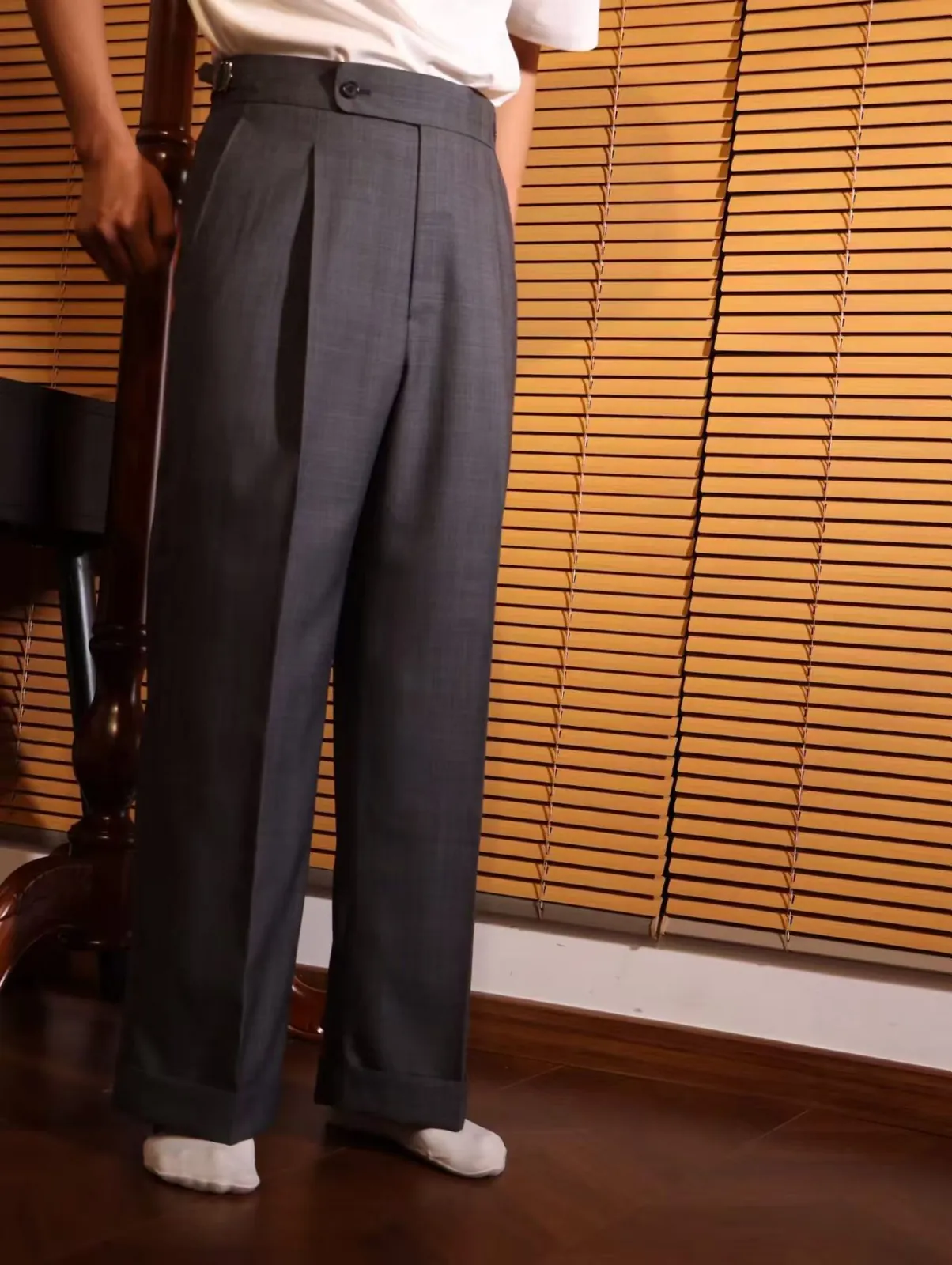
Fit is read from the whole silhouette
A trouser can look neat when folded and still behave differently on the body. These customer-fit images show why waist position, seat allowance, front rise, pleat direction and leg width must be considered together. The grey and navy examples use related tailored details but create different visual effects through cloth, stripe and proportion.
The photographs are useful evidence of overall balance. Final fit decisions should still be based on measurements and the customer's comfort feedback, not on a single camera angle.
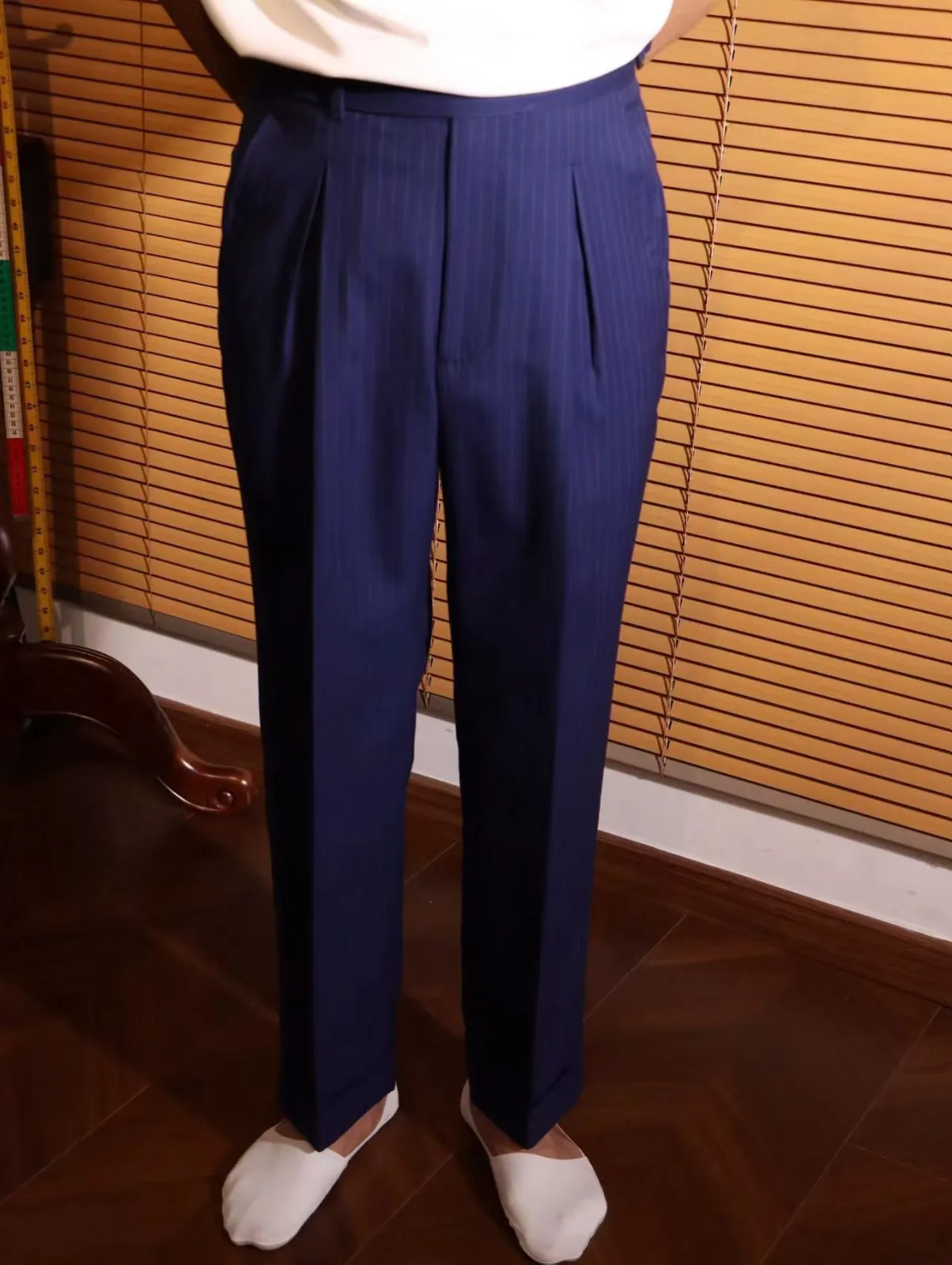
What the front pleats are doing
Pleats provide controlled room at the front of the trouser and can help the cloth fall cleanly from a higher waistband. Their success depends on sufficient rise and seat allowance. If the upper block is too tight, pleats may pull open; if it is too loose, the front can lose definition.
Side adjusters keep the waistband visually clean and allow small fit changes. They are not a substitute for correct sizing, but they can fine-tune the waist without interrupting the line with a belt.
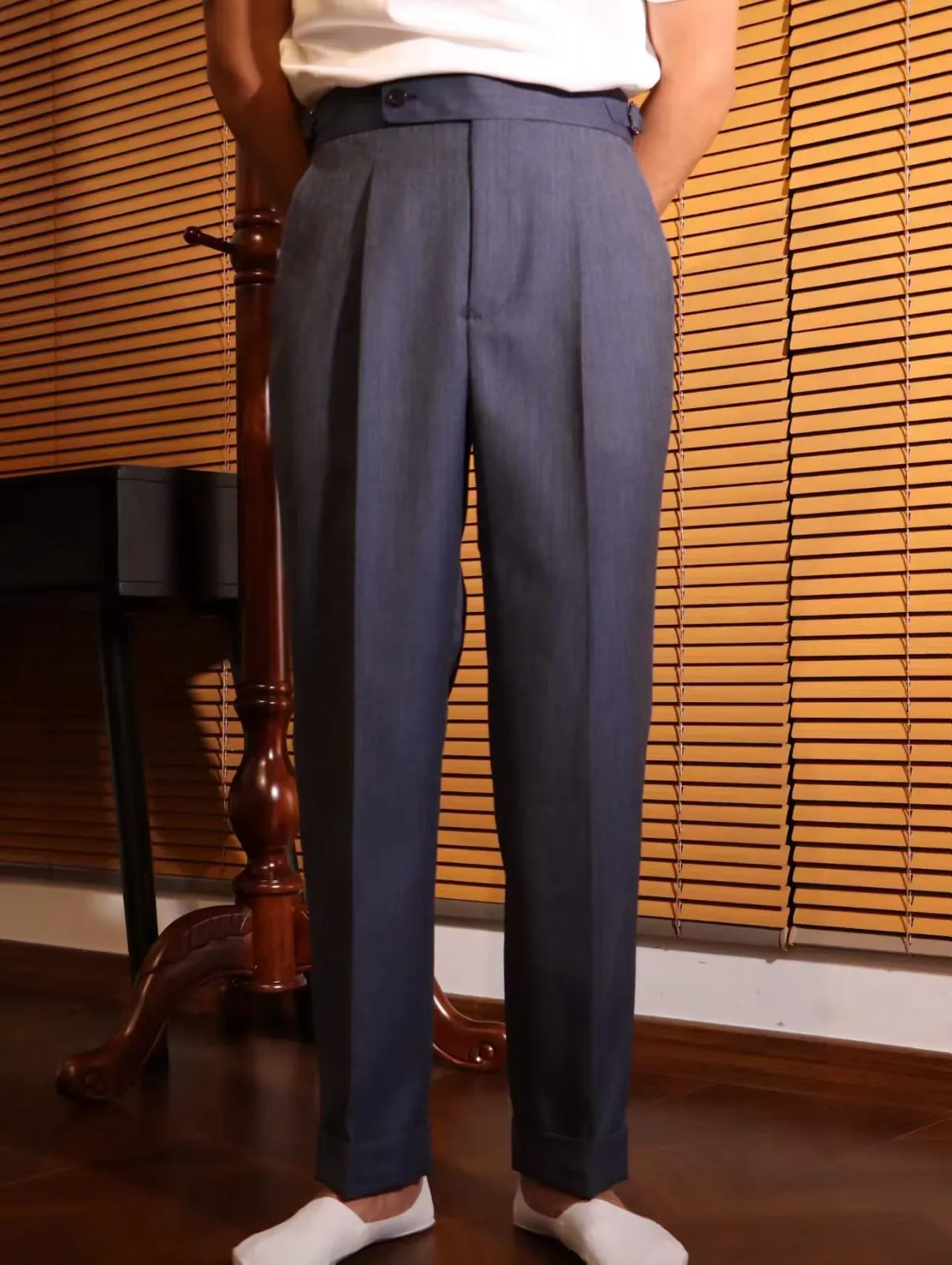
How a retailer should review a fitting
Review the waistband level, front closure, pleat behaviour, pocket opening, side seam, back balance and hem at the same time. Ask the wearer to stand naturally and walk before approving the result. A static pose can hide tension or excess cloth that becomes visible in movement.
Fit feedback should be recorded against the exact order and measurement version. That turns these observations into useful data for the next pair rather than leaving them as informal comments.