
Jacket Details ·
Herringbone Safari Jacket: Pocket, Collar and Zip Detail at verosuits
A verosuits factory update on a herringbone safari jacket, with close views of its zip closure, flap pockets, collar and back adjustment.
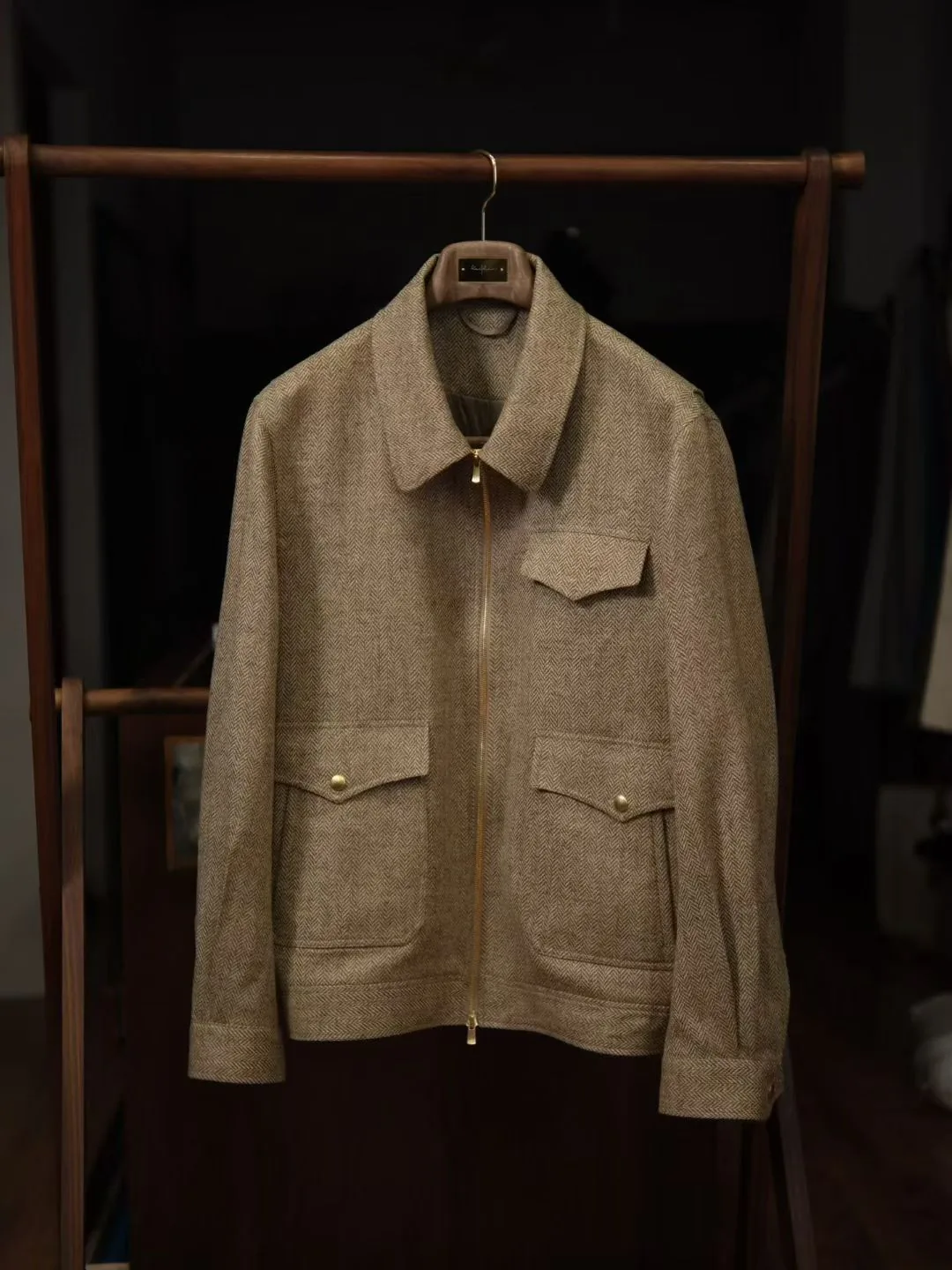
A safari jacket relies on useful detail hierarchy
A safari jacket combines more components than a plain sport coat: a collar, zip or button front, multiple pockets and sometimes an adjustable hem. The design only stays clean when these details have a clear order and do not crowd the front.
This herringbone jacket was made by verosuits as a custom jacket example. The completed garment shows how a textured cloth can carry functional pockets while retaining a tailored overall line.
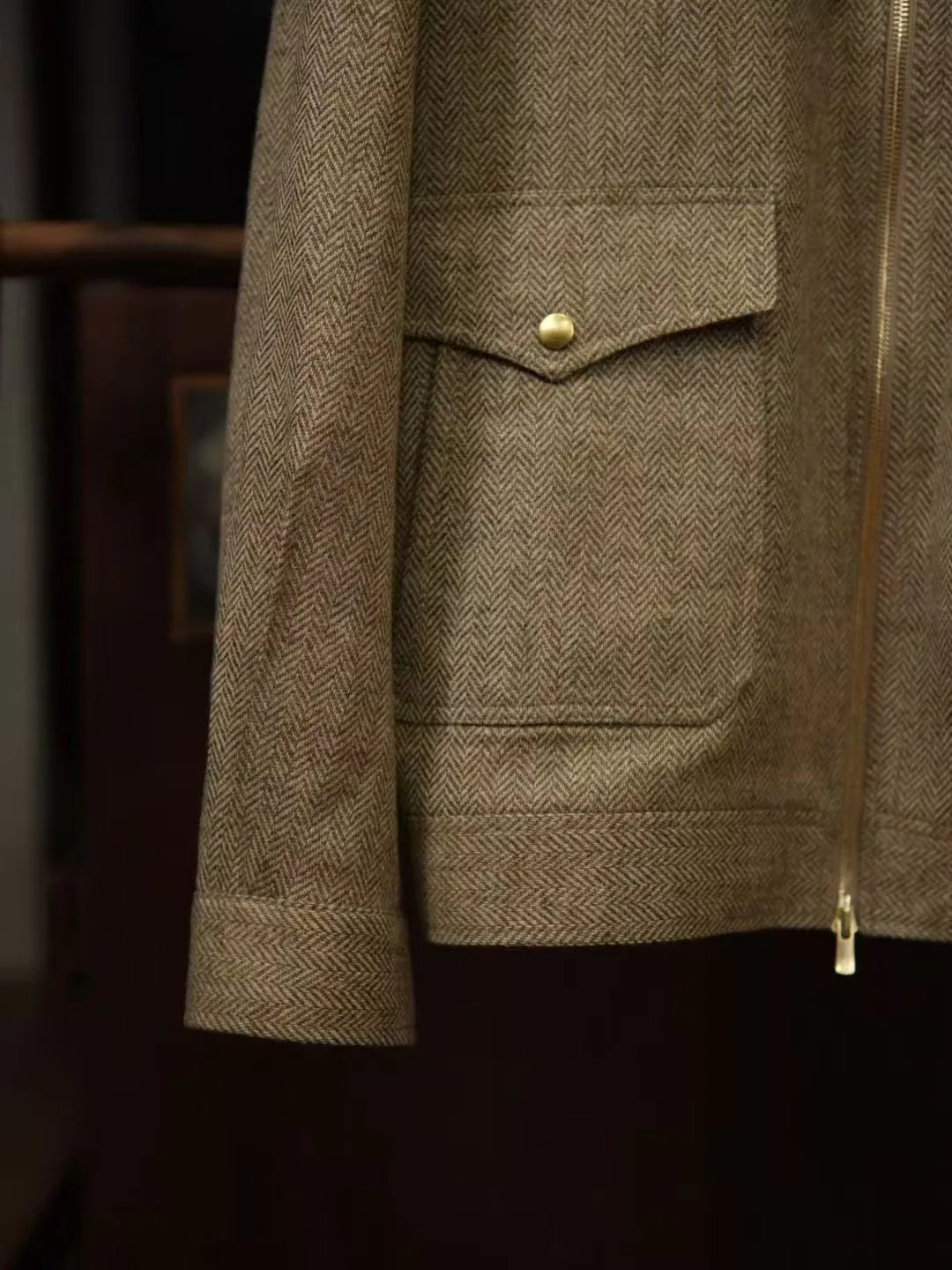
Direction of cloth matters in herringbone
Herringbone makes every seam and pocket edge more visible. The fabric direction should be considered at the collar, front edge, pocket flap and hem so the garment looks deliberate from both close and long range.
The zip should be specified alongside its finish, puller and tape colour. These small decisions determine whether the hardware feels integrated with the cloth or visually separate from it.
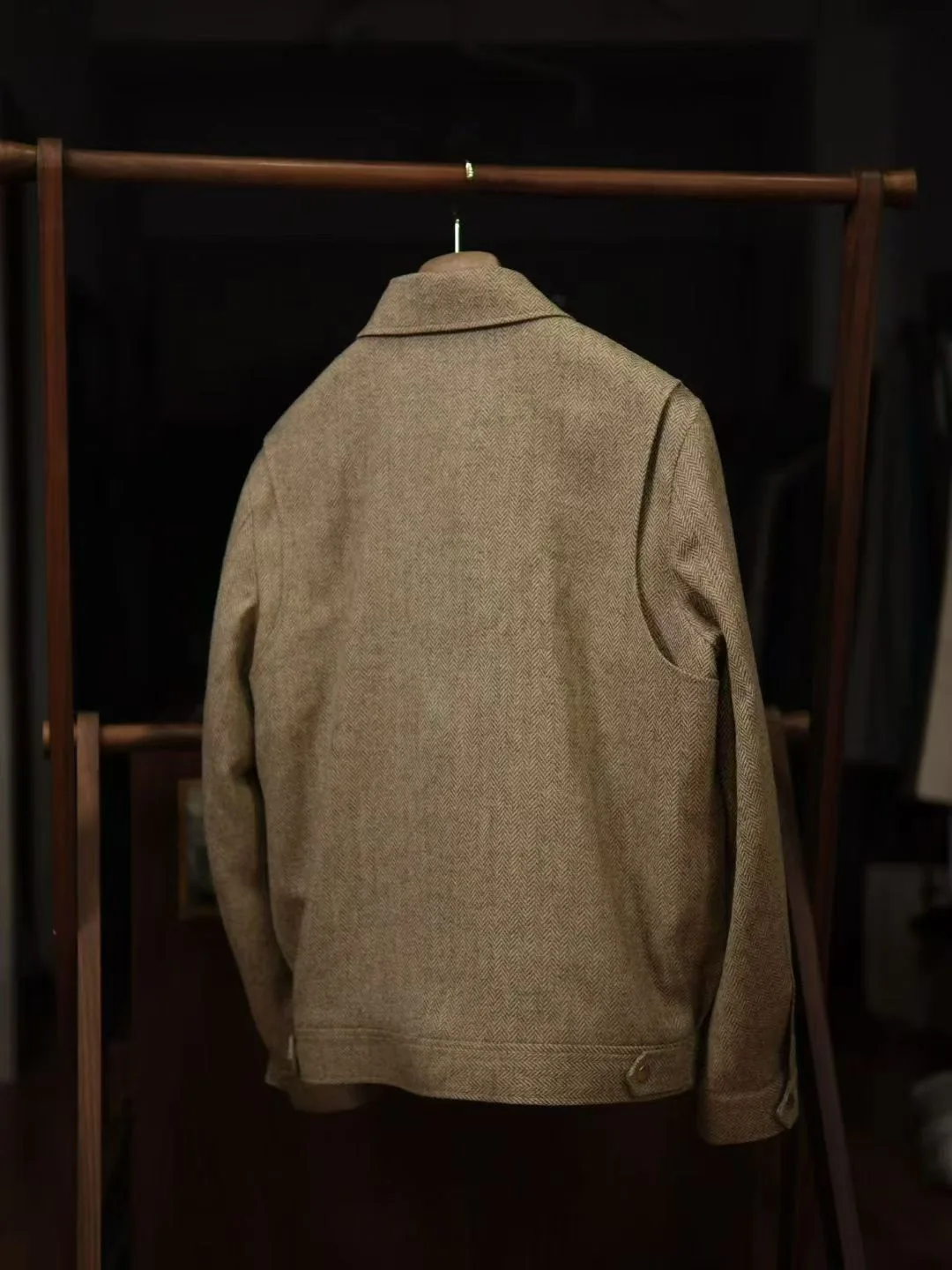
Build the production brief around function
For a custom safari jacket, define the body length, pocket count and size, closure, lining level, collar shape, sleeve cuff, hem adjustment and intended layering. A reference photo is valuable, but the practical functions must be written down for production.
verosuits uses the approved brief to make the jacket repeatable across fabric options and later orders, while allowing a retailer to customise the details that matter to its customer.