
Trouser Craftsmanship ·
Neapolitan-Style Trousers with Side Adjusters: A Waistband Detail Study
A verosuits construction update on Neapolitan-style trousers, comparing shaped side-adjuster straps, buckle placement and waistband finishing in two colourways.
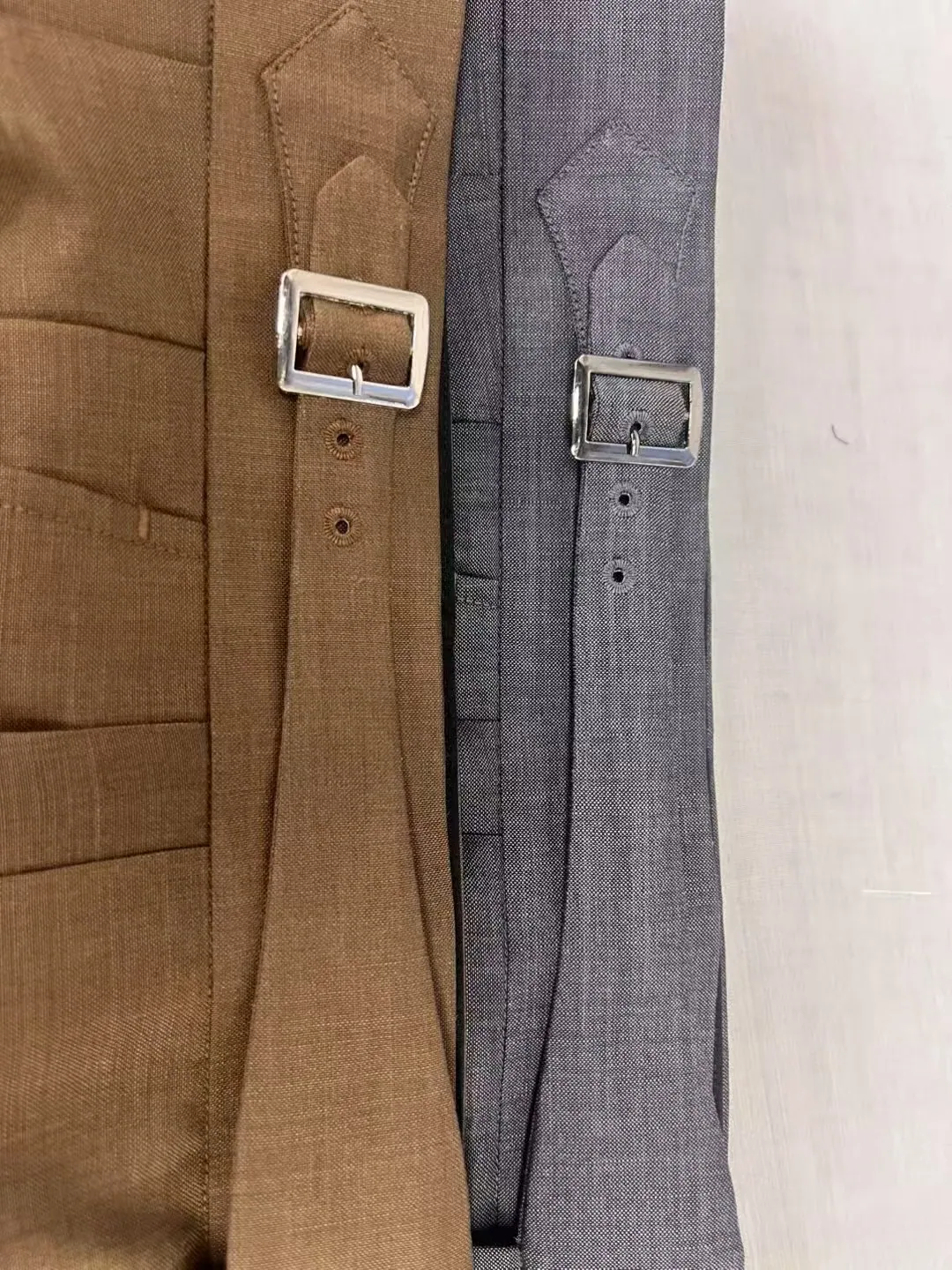
The adjuster is a fit-control detail, not decoration
Side adjusters allow small waist refinements without adding a belt. In a Neapolitan-style trouser, the strap shape, buckle scale and placement must suit the waistband height and the visual weight of the cloth.
The examples in this update were made by verosuits as tailored trouser references. The exact hardware, strap construction and waistband width should be confirmed in the approved order.
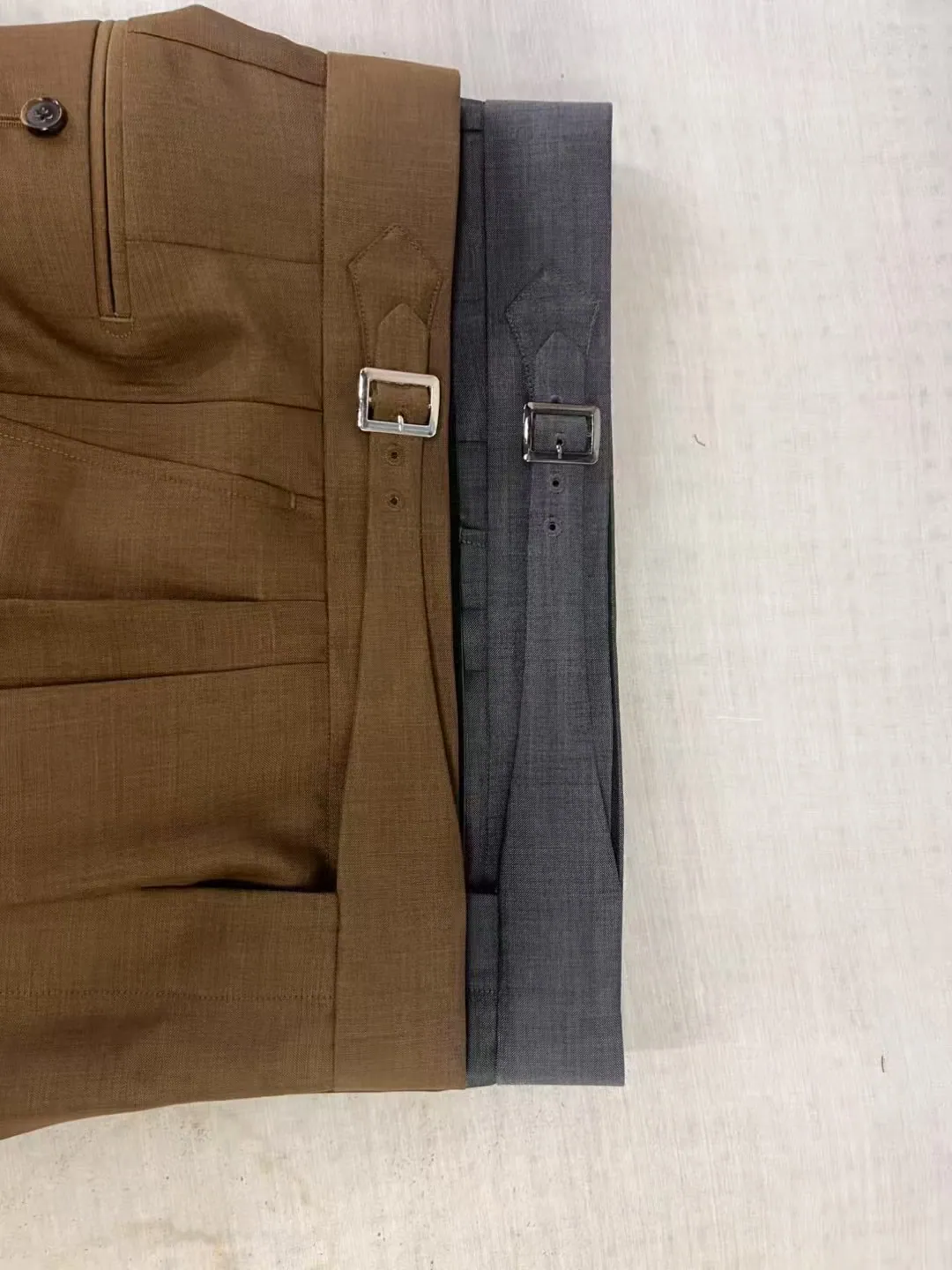
Front and rear balance should be reviewed together
A good front closure can still look wrong if the rear pocket, seat allowance or side seam is poorly balanced. Reviewing the trousers from both angles helps identify whether the side adjuster is sitting naturally rather than pulling the waist out of line.
Pleats, an extended closure and a side adjuster can work together, but each adds material and shaping at the waist. The pattern needs enough room to keep the upper block comfortable and clean.
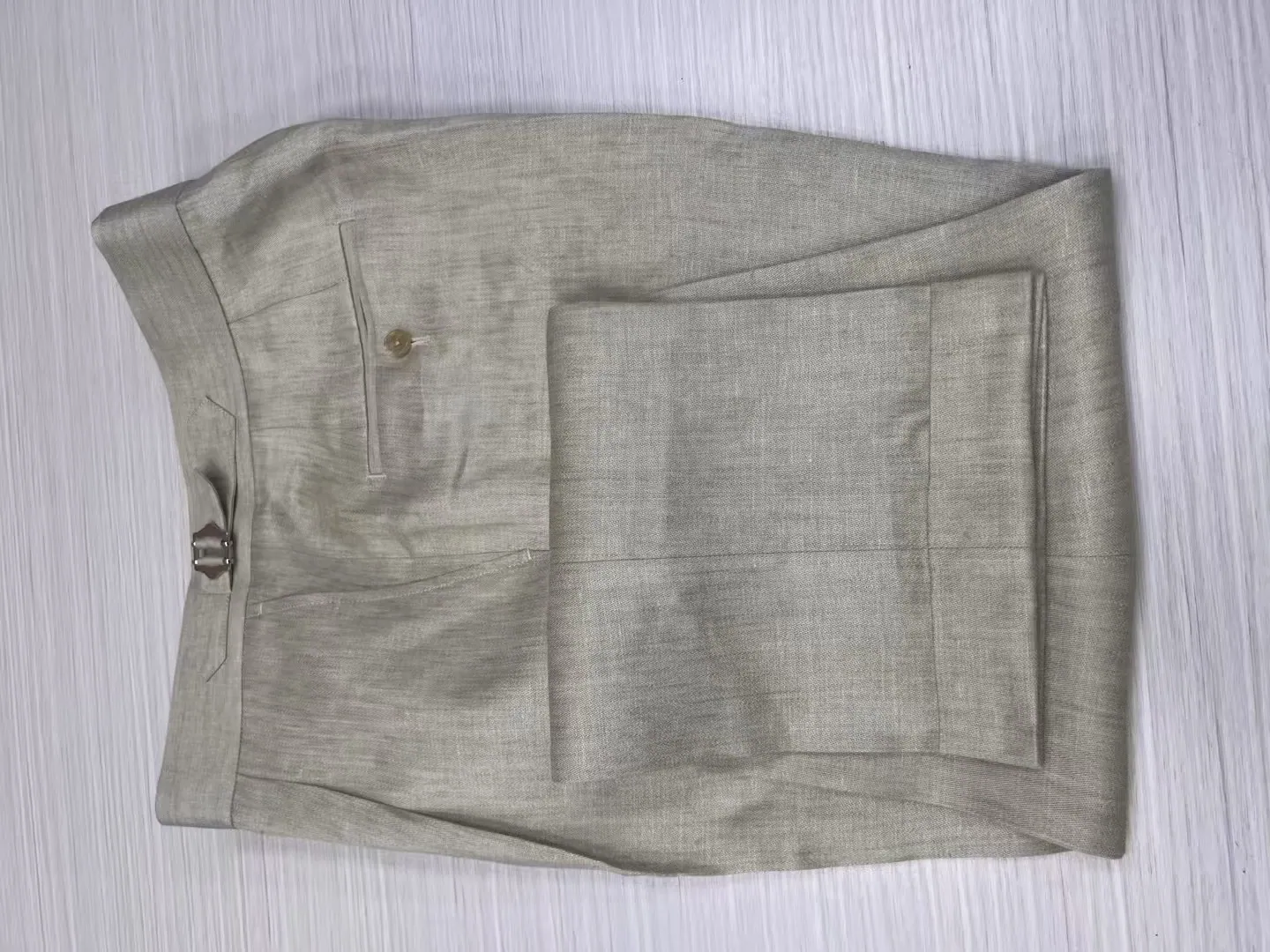
Specify the detail for a repeatable order
For a repeatable trouser, a buyer should record the rise, pleat configuration, waistband height, side-adjuster reference, buckle finish, pocket layout and hem style. A photograph is useful evidence, but it should accompany a written technical approval.
verosuits uses this kind of construction record to connect a visual request with a measurable specification. That makes later colourway changes easier to manage without changing the underlying fit intent.