
Lightweight Jackets ·
Prince of Wales Check Quarter-Lined Jacket: Light Construction at verosuits
A verosuits jacket-construction update showing a Prince of Wales check jacket with quarter lining, visible front basting and a lightly built interior.
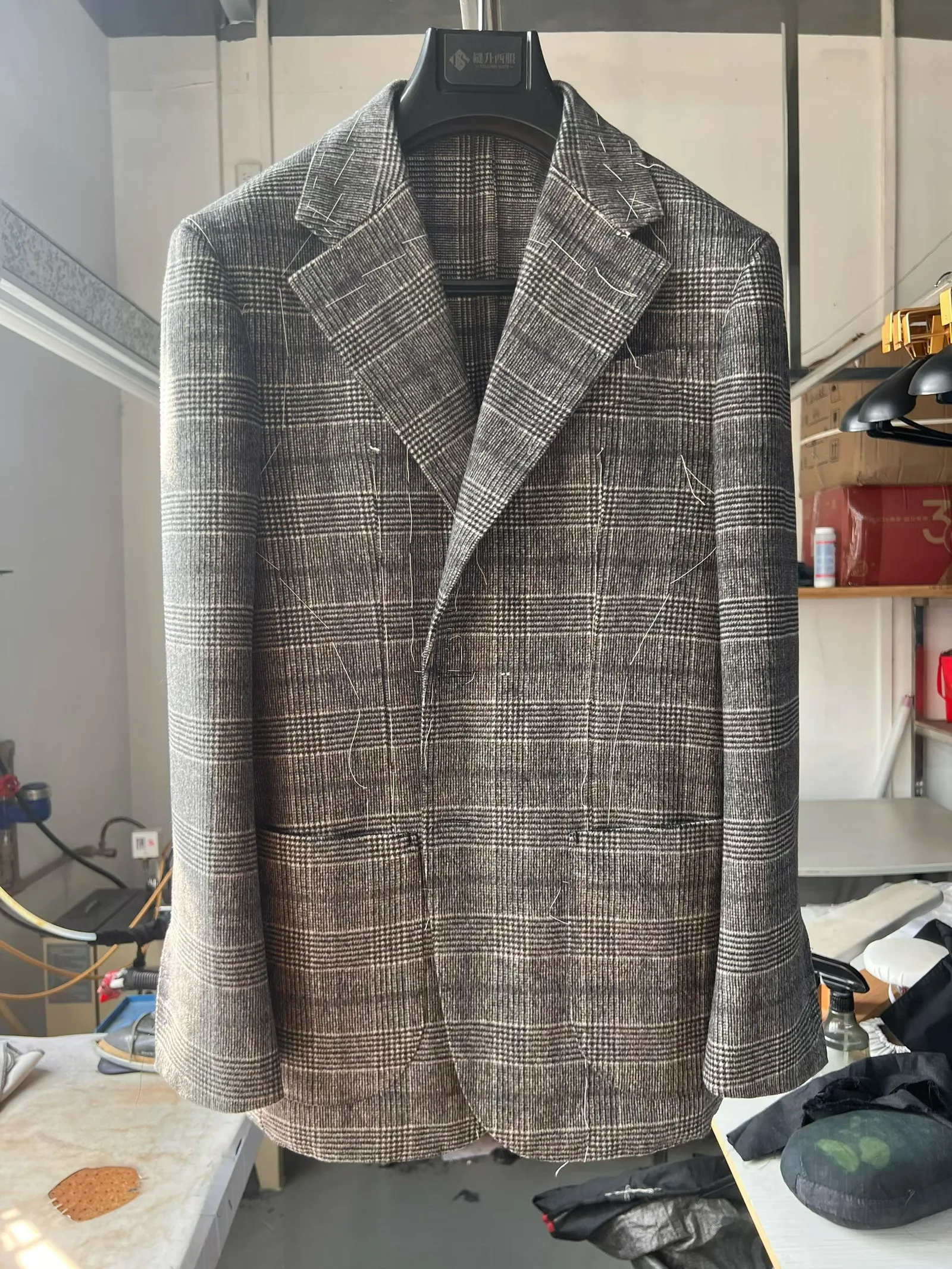
Quarter lining keeps the jacket light
Quarter lining reduces interior coverage compared with a fully lined jacket. It can help a check jacket feel lighter while still finishing the areas that benefit most from support and clean internal presentation.
This Prince of Wales check jacket was made by verosuits as a lightweight construction example. Lining coverage, canvas and shoulder treatment should always be confirmed independently.
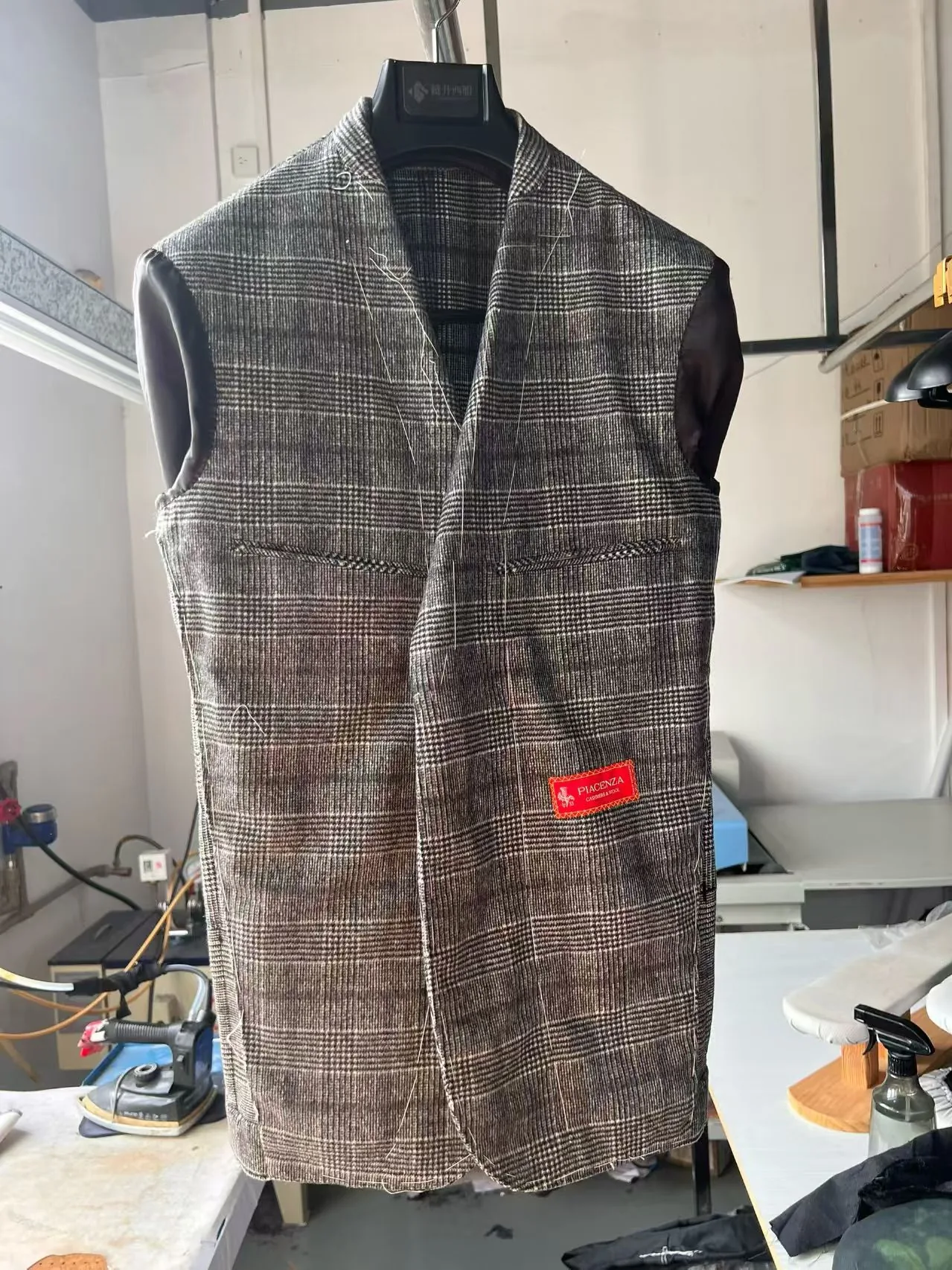
Patterned cloth requires thoughtful placement
With a Prince of Wales check, front edges, pockets and lapels make the pattern especially visible. Construction should respect the cloth direction and keep the main visual lines coherent across the jacket.
The basting stage is useful for reviewing those choices while adjustments remain possible, rather than discovering visual imbalance only when the jacket is complete.
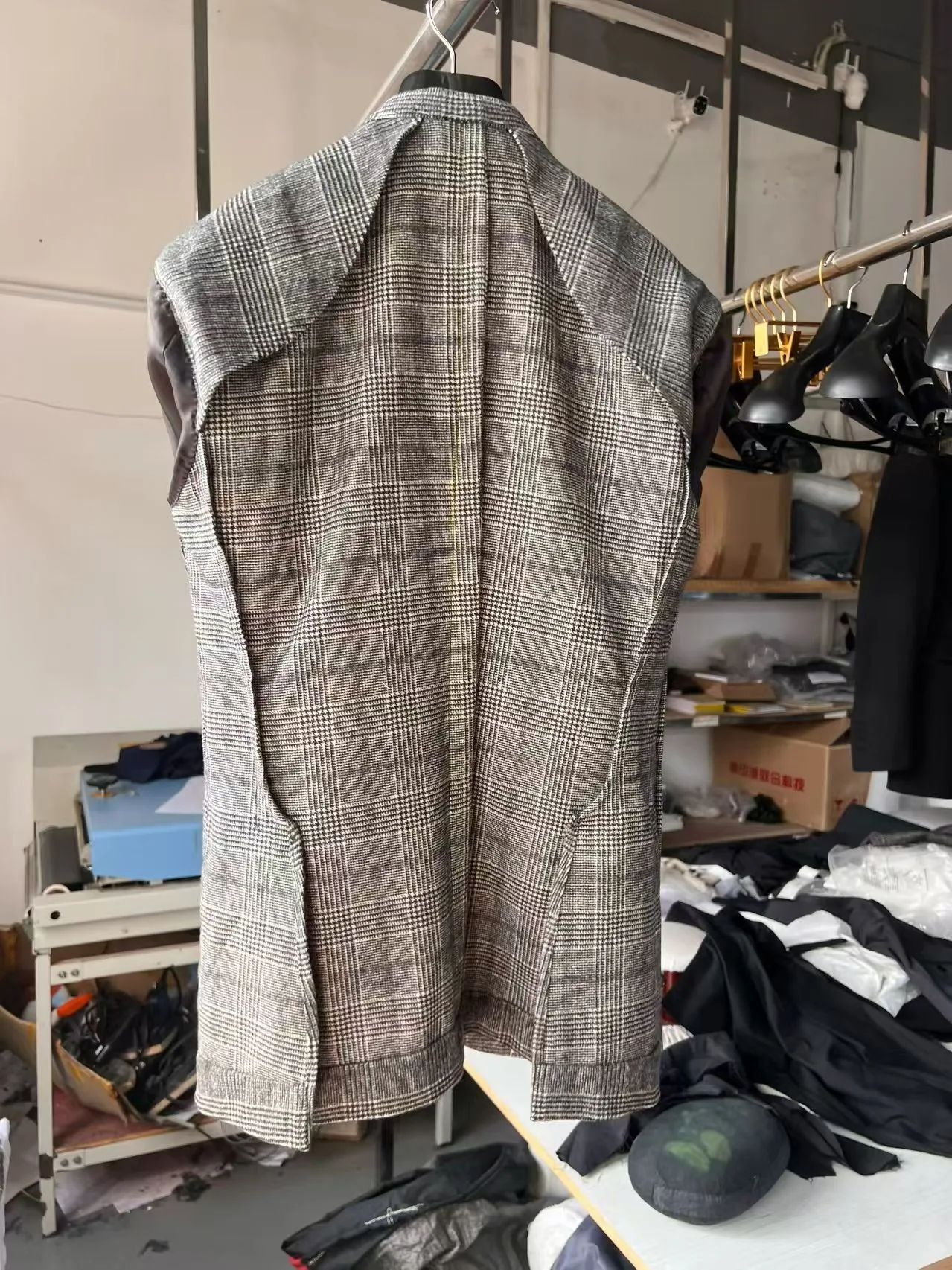
Write the light-construction brief clearly
For a repeatable jacket, specify cloth, lining coverage, canvas level, pockets, lapel shape, vents and sleeve finish together with measurements. This turns a photograph into a production-ready request.
verosuits checks the agreed specifications during production to keep lightweight styling and tailored finish aligned.